Many Hyderabad families now look at rooftop solar to manage their power bills. The PM Surya Ghar Muft Bijli Yojana 2026 offers eligible households central financial assistance of up to ₹78,000 for a rooftop system. This guide covers the subsidy amount, eligibility, documents and online steps, with a close look at Hyderabad and Telangana.
We checked official sources before writing. The latest rate statement we found is a Lok Sabha reply dated 22 July 2026. It matches the rates the Union Cabinet approved in 2024, and we found no 2026 revision. Even so, confirm the figures on the national portal before you sign any contract.
PM Surya Ghar Muft Bijli Yojana 2026: What Is the Scheme?
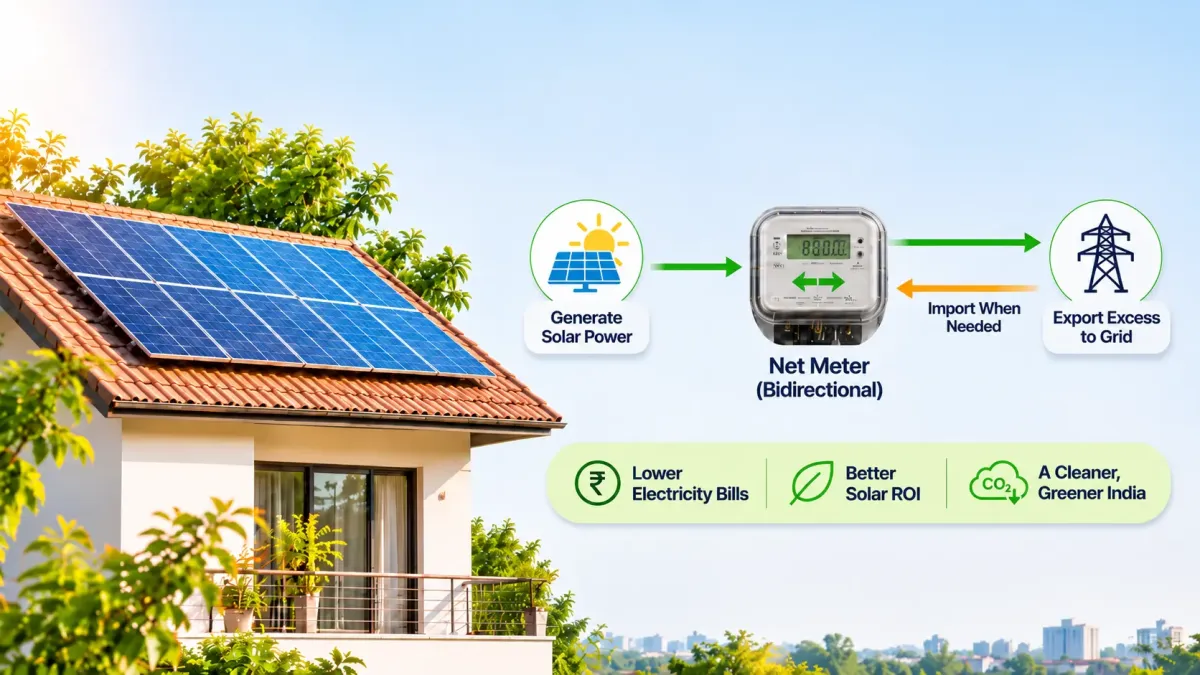
The Ministry of New and Renewable Energy (MNRE) runs the scheme, which the Prime Minister launched in February 2024. It targets rooftop solar for one crore households by FY 2026-27, with an outlay of ₹75,021 crore. You install a solar system on your roof, use the power it makes, and connect it to the grid through your electricity distribution company (DISCOM).
The scheme speaks of up to 300 units of free electricity every month. Read that as a goal, not a guarantee. Your real benefit depends on how much your system generates, how much your home uses and your DISCOM's net metering rules. The government told Parliament that some households saw zero bills in some months, depending on their own consumption. Others still pay a smaller bill.
PM Surya Ghar Subsidy Amount in 2026
Here is the short answer. The central subsidy is ₹30,000 per kW for the first 2 kW and ₹18,000 for the next 1 kW. The scheme stops at 3 kW, so the maximum is ₹78,000, as the Lok Sabha reply of July 2026 confirms.
| System size | Central subsidy (CFA) | How it works |
|---|---|---|
| 1 kW | ₹30,000 | ₹30,000 x 1 kW |
| 2 kW | ₹60,000 | ₹30,000 x 2 kW |
| 3 kW | ₹78,000 | ₹60,000 + ₹18,000 |
| Above 3 kW | ₹78,000 | The 3 kW cap applies |
What these numbers mean
These figures are central financial assistance (CFA) only. The government works them out from benchmark costs, not from your installer's invoice. At benchmark prices, the Cabinet approval note describes the structure as 60% of cost for the first 2 kW and 40% of the extra cost up to 3 kW. Your actual quote can differ.
The money also arrives after installation and inspection, so you pay the system price first unless you take a loan. Our PM Surya Ghar subsidy details page explains the claim stage. Housing societies and resident welfare associations (RWAs) get ₹18,000 per kW for common facilities, up to 500 kW.
We found no officially announced extra state subsidy for regular Telangana homes. Ask TGREDCO or your DISCOM before you count on one.
Eligibility Criteria for PM Surya Ghar Yojana
Official sources keep the core rule simple. You qualify as a residential consumer with a grid-connected electricity connection from your local DISCOM. Then check these points:
- Roof rights: Telangana's net metering guidelines expect you to own the roof or hold legal possession of it.
- Space: TGSPDCL's FAQ says a 1 kW system takes about 10 square metres, so plan for shadow-free room.
- Property type: Commercial, industrial and government connections get no residential CFA.
- One claim per system: The scheme guidelines pay CFA once per installation, and a relocated system does not qualify.
- Apartments: Flat owners should talk to their society, because the scheme funds RWAs separately for shared facilities.
Documents Required for PM Surya Ghar Subsidy
Requirements vary by portal stage and DISCOM, so treat this as a starting checklist.
Needed on the portal: your electricity consumer number, your mobile number and your bank account details. Your DISCOM application also asks for a copy of your latest electricity bill.
Often requested: installers usually collect Aadhaar, a cancelled cheque and a passport-size photo. FutureVolt's subsidy page lists these. The portal or your DISCOM may ask for more, so confirm before you apply.
How to Apply for PM Surya Ghar Yojana Online
The steps below follow the official sequence the Press Information Bureau described in February 2026.
- Register on the national portal using your consumer number and mobile number.
- Select your state and DISCOM, then fill in the rooftop solar application with your preferred system size.
- Wait for DISCOM feasibility approval.
- Choose a registered vendor and install the system after approval.
- Apply for the net meter. The DISCOM inspects the plant and certifies it.
- Submit your bank details on the portal.
- Receive the subsidy in your bank account. The government says it credits the amount within 30 days.
In simple terms, the DISCOM checks feasibility, fits the net meter and inspects your plant. Your registered vendor designs, supplies and installs the system. You supply accurate details and your bank information.
PM Surya Ghar in Hyderabad and Telangana
Find your DISCOM first
Telangana has two DISCOMs. TGSPDCL covers 15 districts, including Hyderabad, Rangareddy and Medchal. TGNPDCL serves northern districts such as Warangal. Your electricity bill shows which one supplies you. Do not assume every consumer follows the same steps, and read the rooftop solar section on your own DISCOM's site. The state nodal agency, TGREDCO, also lists PM Surya Ghar notices for vendors and projects.
Roof, load and meter checks
Shade from nearby buildings, water tanks and parapet walls can cut output, so inspect your terrace at different hours. TGSPDCL's guidelines also limit the total rooftop solar on each distribution transformer to 50% of its rating, and the DISCOM publishes the available capacity on its website. Check that number early.
TGSPDCL's guidelines list a ₹2,500 online processing fee for LT connections, while TGNPDCL lists ₹2,950 including GST. After you submit the installation certificate, TGSPDCL's guidelines give the utility 15 days to sign the agreement, fit the meter and commission the system. Fees and timelines can change, so check the current notice.
How to Estimate Your Solar Savings
Picture a homeowner in Hyderabad who wants a 3 kW system. This is an illustration, not a customer case. Suppose a vendor quotes ₹1,95,000. The ₹78,000 subsidy would cut the net outlay to ₹1,17,000, if the DISCOM and portal approve the claim.
Now think about usage. The government says a 3 kW system can generate over 300 units a month on average. A Secunderabad family using about 350 units would still draw some power from the grid. Generation changes with season, shade and upkeep, and your tariff slab decides the rupee savings. Use the tool to calculate your potential solar savings, then ask for a site survey.
Common Mistakes to Avoid
- Applying through unofficial websites. Use only the national portal and your DISCOM's site.
- Hiring an unregistered vendor. Confirm the vendor's registration on the portal.
- Picking the wrong capacity. Match the size to your usage and your shadow-free roof area.
- Entering wrong consumer details. One wrong digit can stall your claim.
- Skipping DISCOM feasibility approval. Install only after you receive it.
- Treating the subsidy as an upfront discount, or as your total cost. It covers part of the price and arrives later.
- Ignoring warranty and maintenance terms. Read them before you sign.
- Expecting a guaranteed zero bill. Results vary with each home.
How FutureVolt Can Help With Rooftop Solar
FutureVolt is a rooftop solar company with its office in Narsingi, Rangareddy. Its website lists residential, commercial and industrial solar, along with design, installation, government approval support and operations and maintenance (O&M). Homeowners can start with the residential rooftop solar solutions page.
FutureVolt also lists loan and EMI options through bank and NBFC partners, and you can explore solar financing options there. The central scheme announced collateral-free, low-interest loans for systems up to 3 kW, so compare both before you decide.
No installer can guarantee subsidy approval, fixed savings or a zero bill, and you should be wary of anyone who does. A good partner helps you size the system, understand the subsidy and plan the installation.
Conclusion
The PM Surya Ghar Muft Bijli Yojana 2026 still offers up to ₹78,000 in central assistance, and Hyderabad homeowners can claim it by following the portal and DISCOM steps in order. Confirm your eligibility, pick a registered vendor and keep your details accurate.
Ready to explore rooftop solar for your Hyderabad or Telangana home? Use the solar calculator for a first estimate, then request a consultation with FutureVolt on 9160779911. The team can review your roof, your electricity use and your subsidy options with you.
Frequently Asked Questions
What is PM Surya Ghar Muft Bijli Yojana 2026?
It is a central scheme that gives eligible households financial assistance to install rooftop solar. The government aims to provide up to 300 units of free electricity a month, but your actual benefit depends on generation, consumption and DISCOM rules.
How much subsidy is available under PM Surya Ghar Yojana in 2026?
The central subsidy is ₹30,000 per kW for the first 2 kW and ₹18,000 for the next 1 kW. The scheme caps it at 3 kW, so the maximum is ₹78,000.
Who is eligible for PM Surya Ghar Muft Bijli Yojana?
Official sources say residential consumers with a grid-connected electricity connection from their local DISCOM can apply. You also need a suitable roof and the right to install a system on it.
Can Hyderabad residents apply for PM Surya Ghar Yojana?
Yes, eligible Hyderabad households can apply on the national portal. TGSPDCL, whose area includes Hyderabad, runs the net metering side.
What documents are required for PM Surya Ghar subsidy?
You need your electricity consumer number, mobile number and bank details for the portal, plus your latest electricity bill for the DISCOM. Installers often also collect Aadhaar, a cancelled cheque and a photo.
How can I apply for PM Surya Ghar Yojana online?
Register on pmsuryaghar.gov.in with your consumer and mobile numbers, then submit the rooftop application. After DISCOM approval, install the system with a registered vendor, complete net meter inspection and submit your bank details.
Can commercial properties receive PM Surya Ghar subsidy?
No. The scheme gives central assistance to residential consumers, and commercial, industrial and government connections do not receive residential CFA.
How long does it take to receive the rooftop solar subsidy?
The government says it credits the subsidy within 30 days after you submit your bank details, and it reports an average of about 15 days when your details are correct. Actual timing can vary with verification and your DISCOM.